
Introduction
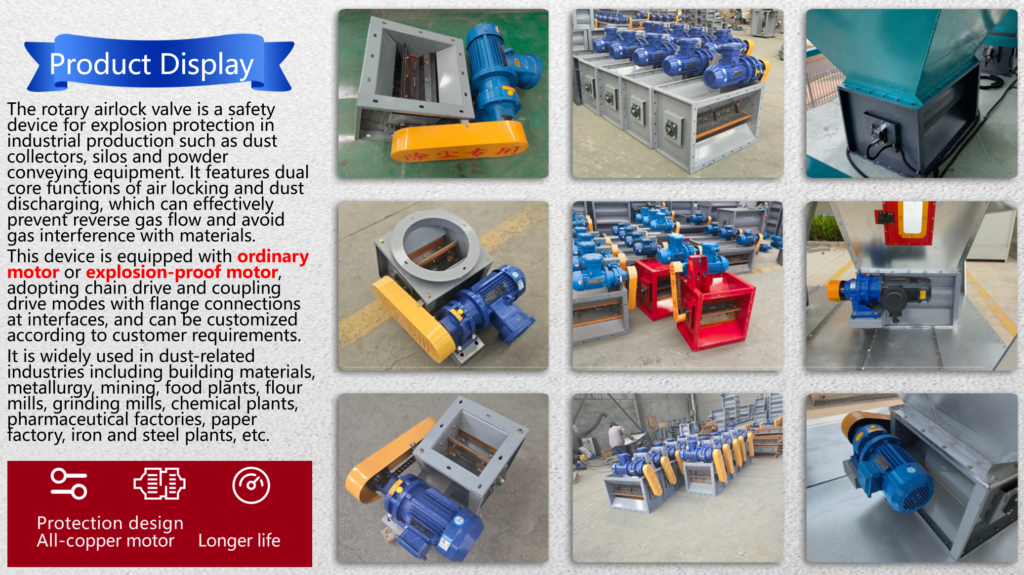
In industrial dust collection systems, maintaining continuous airflow and preventing dust leakage are critical for efficient operation. A rotary airlock valve, also known as a rotary valve or rotary feeder, is an essential component installed at the bottom of dust collectors, bag filters, and cyclone separators. Its main function is to discharge collected dust while maintaining the pressure difference between the clean air side and the dirty air side of the system.
A properly designed rotary airlock valve helps improve dust collector performance, reduce maintenance costs, and ensure stable operation in industries such as cement, power generation, chemical processing, woodworking, metalworking, and food processing.
How Does a Rotary Airlock Valve Work?
A rotary airlock valve consists of a housing, rotor, blades, shaft, bearings, and drive system. The rotor is equipped with multiple pockets that rotate continuously inside the valve body.
The working process is simple:
-
Dust enters the valve from the dust collector hopper
When dust particles accumulate in the hopper, they fall into the pockets of the rotating rotor.
-
The rotor carries the dust downward
As the rotor turns, the dust-filled pockets move from the inlet side to the discharge side.
-
Dust is released into the lower equipment
When the pockets reach the outlet, gravity causes the dust to fall into a collection bin, screw conveyor, pneumatic conveying system, or other downstream equipment.
-
The empty pockets return for another cycle
The rotor continues rotating, allowing continuous dust discharge while minimizing air leakage.
The key feature of a rotary airlock valve is that it allows solid material flow while acting as an air seal between two areas with different pressures.
Why Is a Rotary Airlock Valve Used in Dust Collectors?
A dust collector operates under negative pressure created by an exhaust fan. Without an effective discharge device, opening the bottom of the hopper would allow outside air to enter, reducing system efficiency.
A rotary airlock valve provides several important functions:
1. Maintains Air Pressure Balance
The valve creates a seal between the dust collector hopper and the dust disposal system. This prevents excessive air infiltration and helps maintain stable airflow.
2. Enables Continuous Dust Discharge
Unlike manual dust removal methods, rotary airlock valves allow dust to be discharged continuously without stopping the dust collector.
3. Prevents Dust Accumulation
If dust is not removed from the hopper in time, it can build up and block the airflow path, reducing filtration efficiency. A rotary valve ensures reliable dust removal.
4. Improves System Efficiency
By minimizing air leakage, the dust collector fan requires less energy to maintain the designed airflow, reducing operating costs.
Main Applications of Rotary Airlock Valves
Rotary airlock valves are widely used in many dust collection applications, including:
- Baghouse dust collectors
- Cartridge dust collectors
- Cyclone separators
- Industrial vacuum systems
- Pneumatic conveying systems
- Material handling equipment
Typical industries include:
- Cement plants
- Steel mills
- Foundries
- Power plants
- Chemical factories
- Wood processing facilities
- Grain and food industries
- Pharmaceutical manufacturing
Types of Rotary Airlock Valves for Dust Collection
Different applications require different rotary valve designs.
1. Standard Rotary Airlock Valve
A general-purpose design suitable for common dry dust and powder materials. It is widely used in standard dust collection systems.
2. Heavy-Duty Rotary Airlock Valve
Designed for abrasive materials such as:
- Metal dust
- Sand
- Cement powder
- Mineral particles
These valves usually have stronger housings and wear-resistant components.
3. High-Temperature Rotary Airlock Valve
Used in applications involving hot materials or high-temperature gases. Special materials and sealing designs are required.
4. Explosion-Proof Rotary Airlock Valve
For combustible dust applications, rotary valves may be designed to meet explosion protection requirements and work together with explosion venting or isolation systems.
Key Factors When Selecting a Rotary Airlock Valve
Choosing the correct rotary airlock valve is important for reliable dust collector operation. The main factors include:
Material Characteristics
Consider:
- Dust particle size
- Density
- Abrasiveness
- Temperature
- Moisture content
Air Leakage Requirements
For high-efficiency dust collection systems, a valve with good sealing performance is necessary to minimize pressure loss.
Capacity Requirements
The rotary valve must match the dust discharge rate of the dust collector. An undersized valve may cause dust buildup, while an oversized valve may increase unnecessary costs.
Construction Materials
Common materials include:
- Cast iron
- Carbon steel
- Stainless steel
- Wear-resistant alloys
The material should be selected according to the working environment.
Common Problems with Rotary Airlock Valves
Dust Leakage
Poor sealing or worn rotor tips can cause air leakage and reduce dust collector efficiency.
Solution:
Regularly inspect sealing clearance and replace worn parts.
Rotor Blocking
Large particles or foreign objects may prevent the rotor from turning.
Solution:
Install protective screens and perform regular cleaning.
Excessive Wear
Abrasive dust can damage rotor blades and housing surfaces.
Solution:
Use wear-resistant materials and proper maintenance procedures.
Motor or Gearbox Failure
Improper lubrication or overload conditions may damage the drive system.
Solution:
Follow manufacturer maintenance recommendations.
Maintenance Tips for Rotary Airlock Valves
To ensure long service life:
- Check rotor rotation regularly
- Inspect blade clearance
- Lubricate bearings properly
- Remove foreign materials
- Monitor unusual noise or vibration
- Replace damaged seals promptly
Regular maintenance helps prevent unexpected downtime and keeps the dust collection system operating efficiently.
Conclusion
A rotary airlock valve for dust collectors is a critical component that provides continuous dust discharge while maintaining system pressure and preventing air leakage. By creating an effective seal between the dust collector hopper and the discharge equipment, it improves filtration performance, reduces energy consumption, and ensures reliable operation.
Selecting the right rotary airlock valve based on dust characteristics, operating conditions, and system requirements is essential for achieving maximum efficiency and long-term performance in industrial dust collection systems.