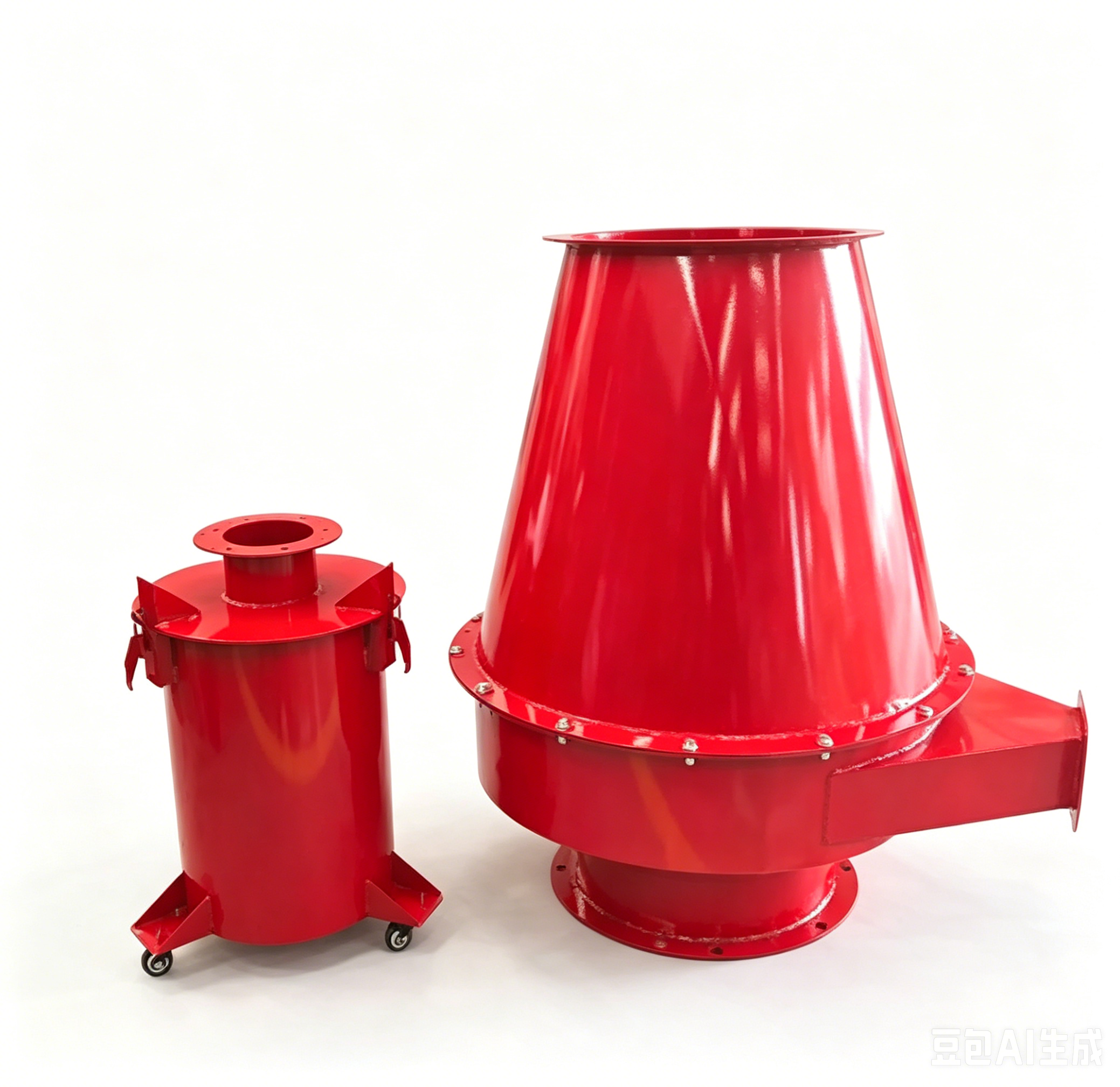

A spark trap (also called a spark arrestor or spark separator in some contexts) is designed to intercept hot particles—such as sparks, embers, or burning debris—carried by airflow in pneumatic conveying systems, ventilation ducts, or dust collection systems.
These sparks are often generated during processes like:
- Metal grinding or cutting
- Woodworking (sawing, sanding)
- Biomass processing
- Recycling operations
- Welding or thermal cutting
Without protection, these sparks can enter filters, cyclones, or dust collectors and potentially cause fires or explosions.
How a Spark Trap Works
A spark trap typically works through mechanical separation and airflow disruption:
- Airflow change
The design forces the air to change direction rapidly. - Inertia separation
Heavier spark particles cannot follow the airflow path and are forced into collection areas. - Cooling and extinguishing
Sparks lose heat as they travel through metal surfaces or expansion chambers. - Safe discharge or collection
Captured particles are either collected in a bin or safely discharged without ignition risk.
Some advanced systems also include water quenching, where sparks are extinguished using a water spray.
Types of Spark Traps
1. Inline Spark Traps
Installed directly in ducting systems; compact and widely used in dust collection lines.
2. Cyclonic Spark Separators
Use centrifugal force to separate sparks from airflow.
3. Water-Based Spark Arrestors
Use water mist or pools to cool and extinguish hot particles.
4. Integrated Dust Collector Protection Units
Built into larger filtration systems for continuous industrial protection.
Where Spark Traps Are Used
Spark traps are common in industries where combustible dust or flammable materials are present:
- Woodworking factories
- Paper and pulp production
- Metal fabrication shops
- Grain processing and agriculture
- Chemical manufacturing
- Recycling plants
Why Spark Traps Are Important
Spark traps play a critical role in industrial fire prevention systems:
- Reduce risk of dust explosions (ATEX environments in Europe)
- Protect expensive filtration equipment
- Improve workplace safety compliance
- Minimize downtime caused by fires
- Enhance overall system reliability
Even a small spark can ignite dust clouds, making early interception essential.
Maintenance Considerations
To ensure effectiveness, spark traps require regular maintenance:
- Inspect for dust buildup or blockage
- Clean internal surfaces periodically
- Check airflow resistance
- Verify discharge or collection systems
- Ensure proper installation alignment
Poor maintenance can significantly reduce their safety performance.
Conclusion
A spark trap is a simple but essential industrial safety device that prevents fire hazards by capturing or extinguishing sparks before they reach sensitive equipment. In industries dealing with combustible dust or flammable materials, it is a key component of any effective fire prevention strategy.