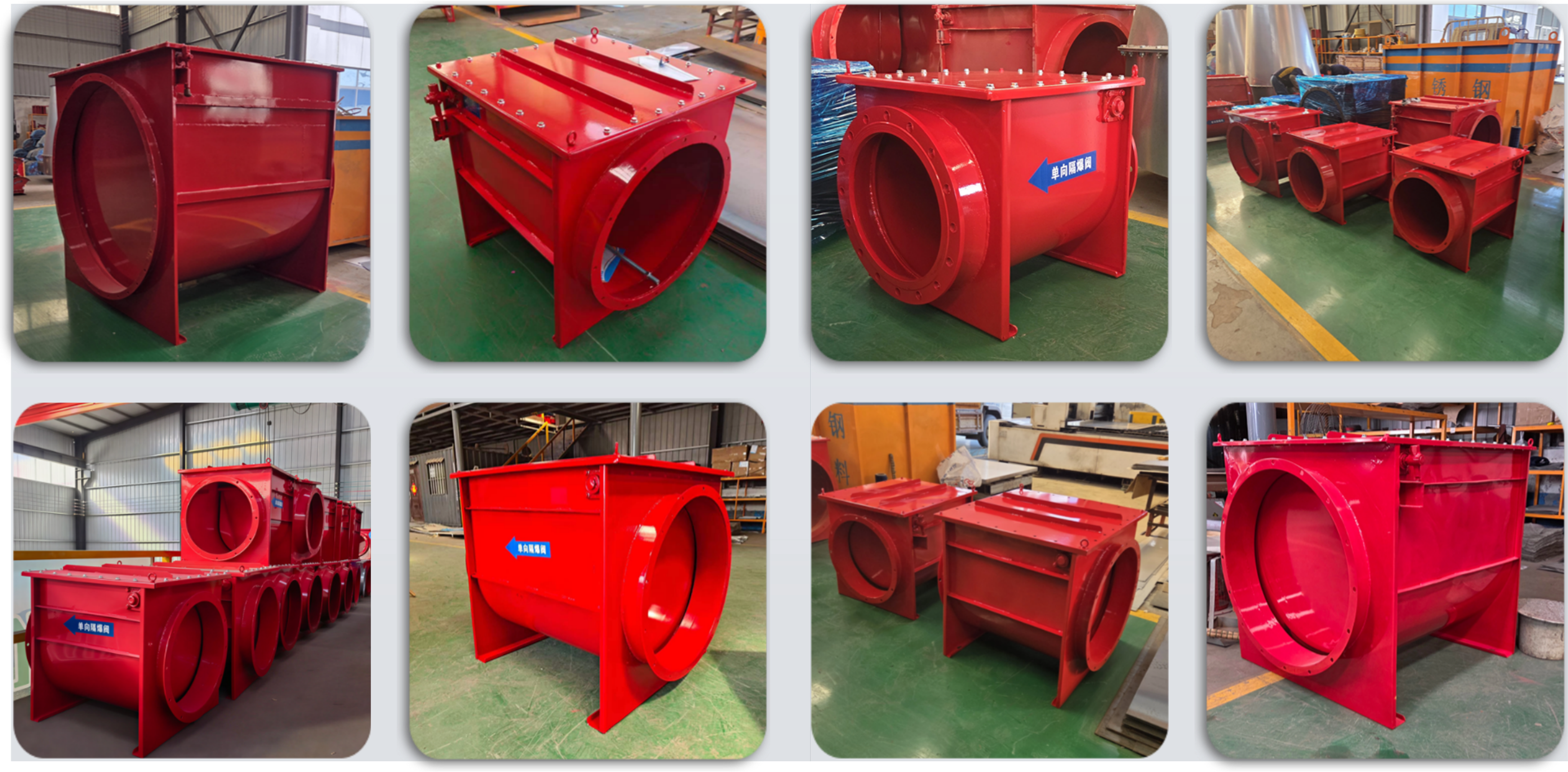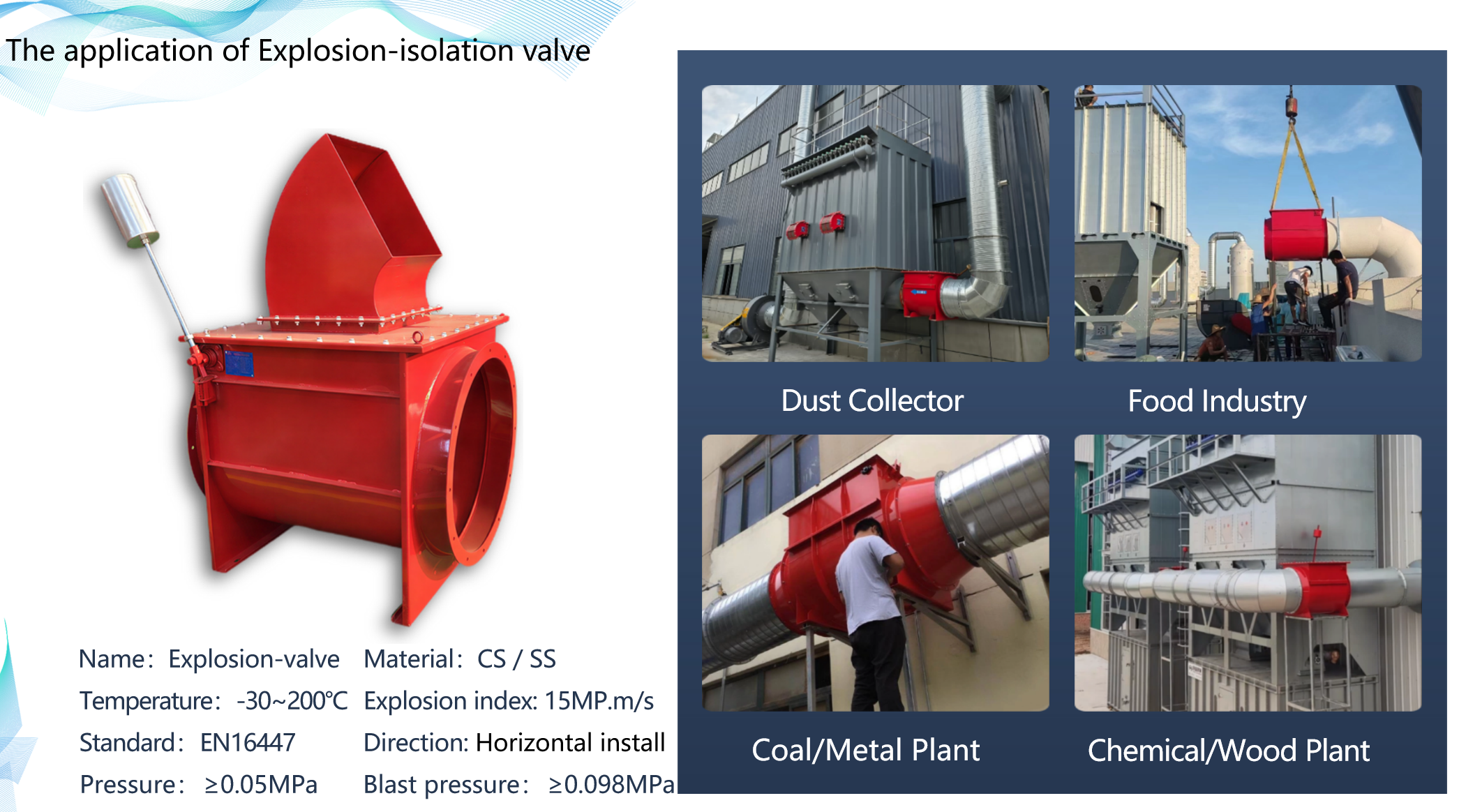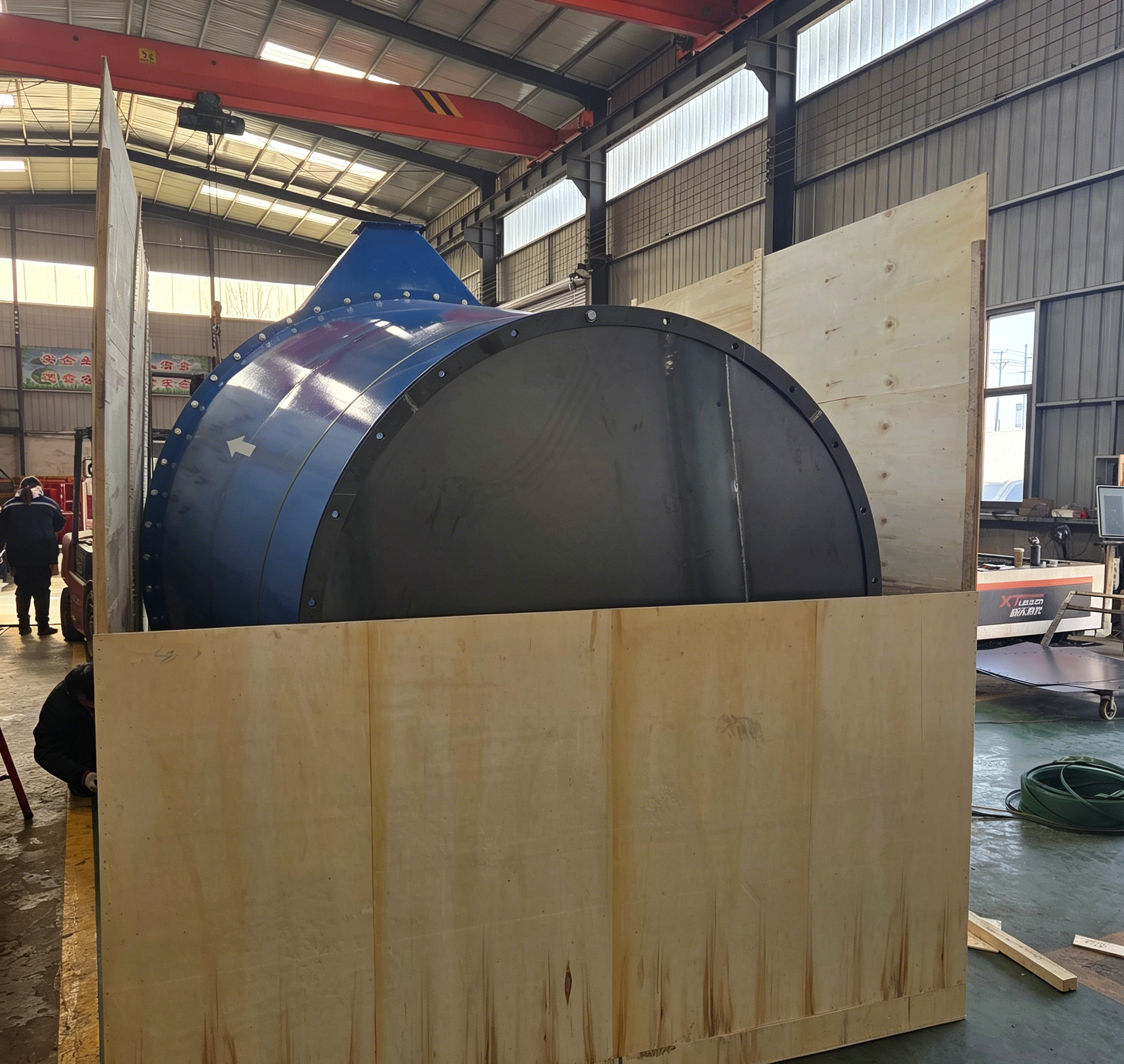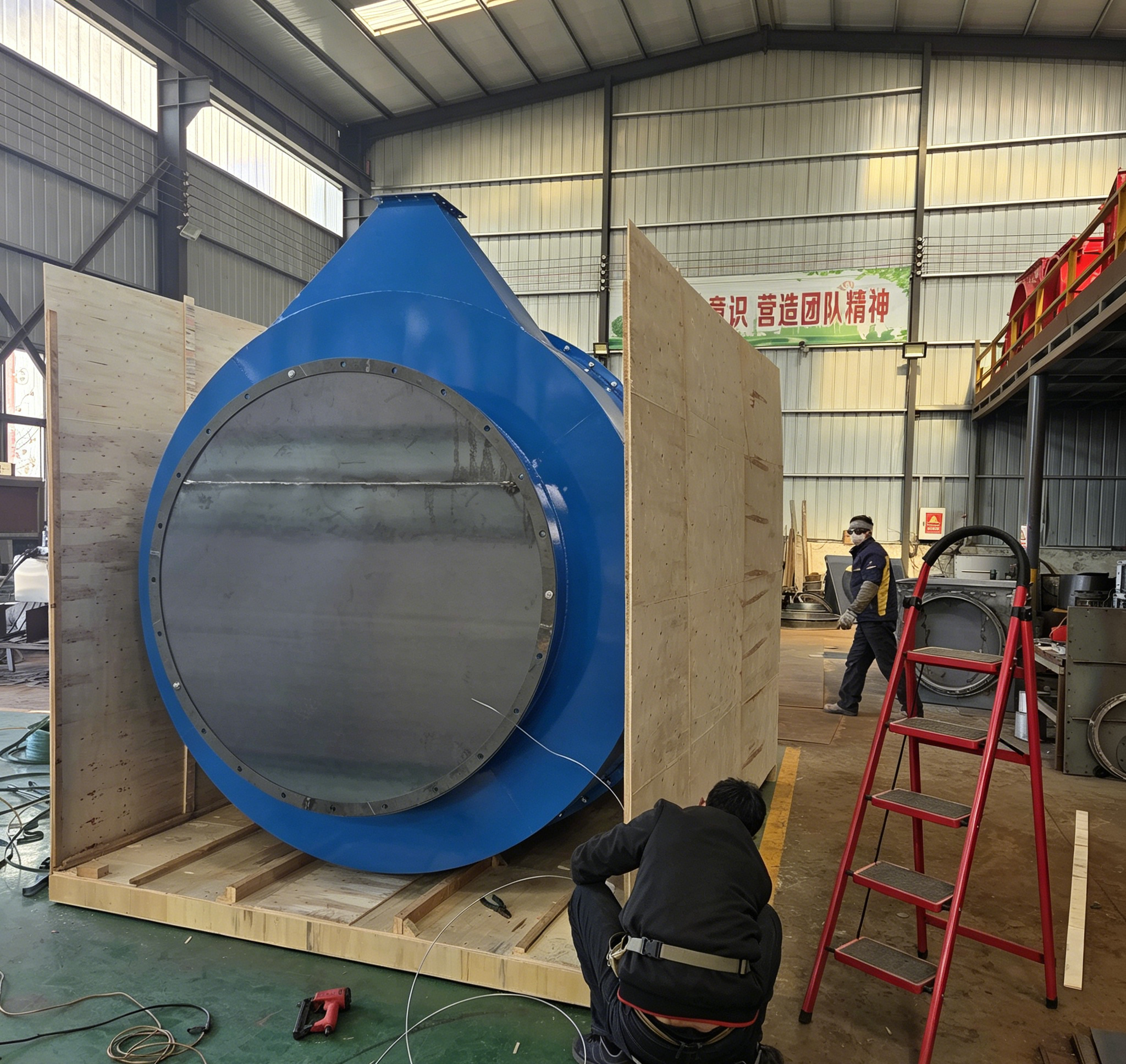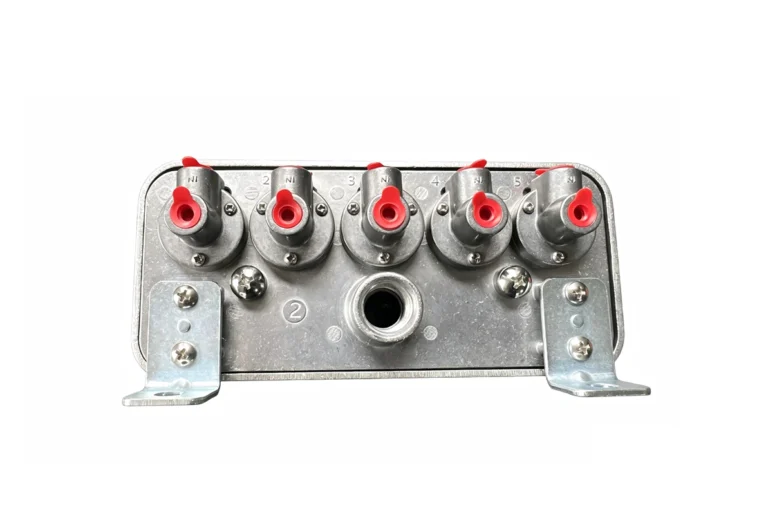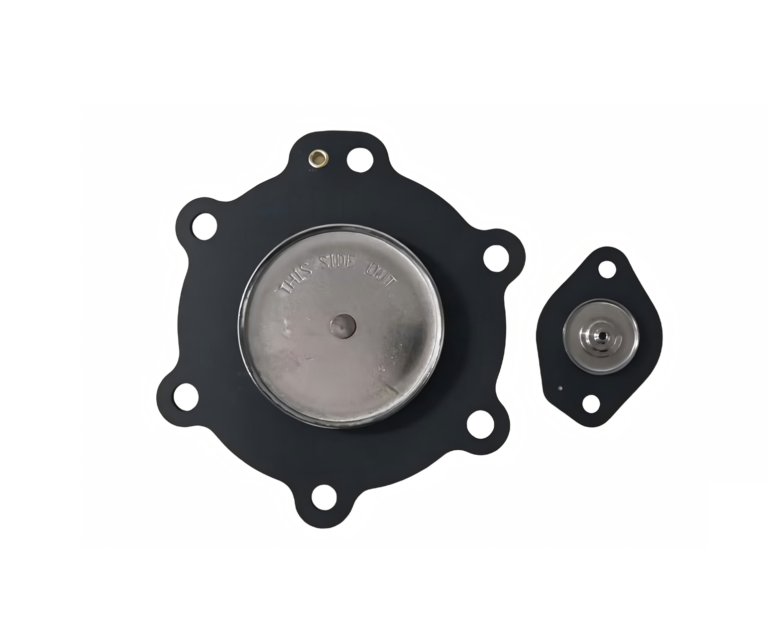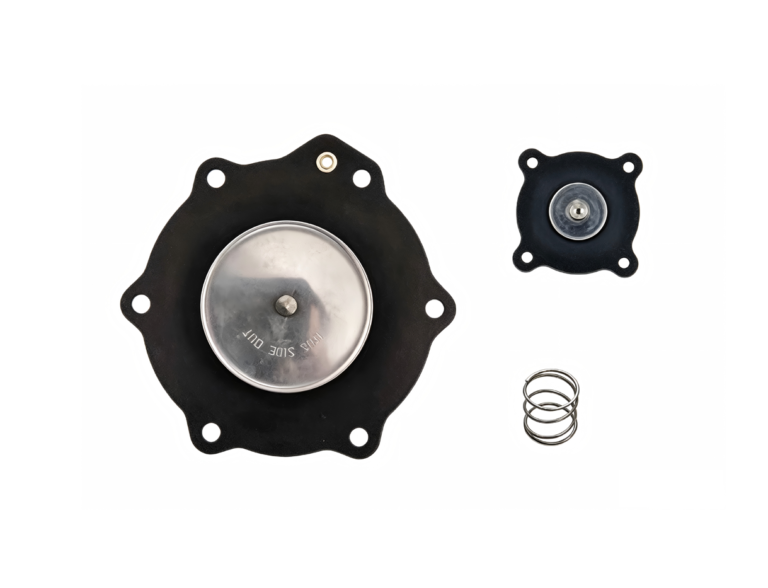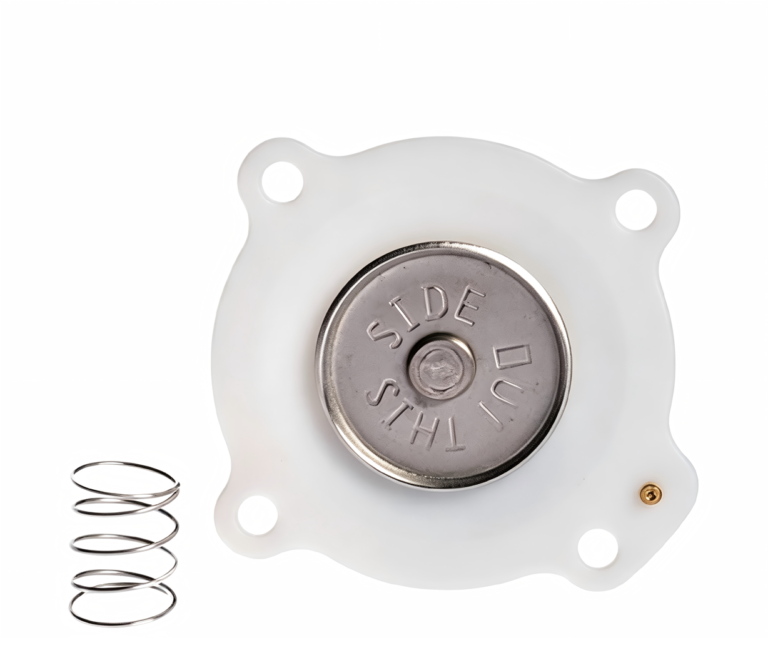
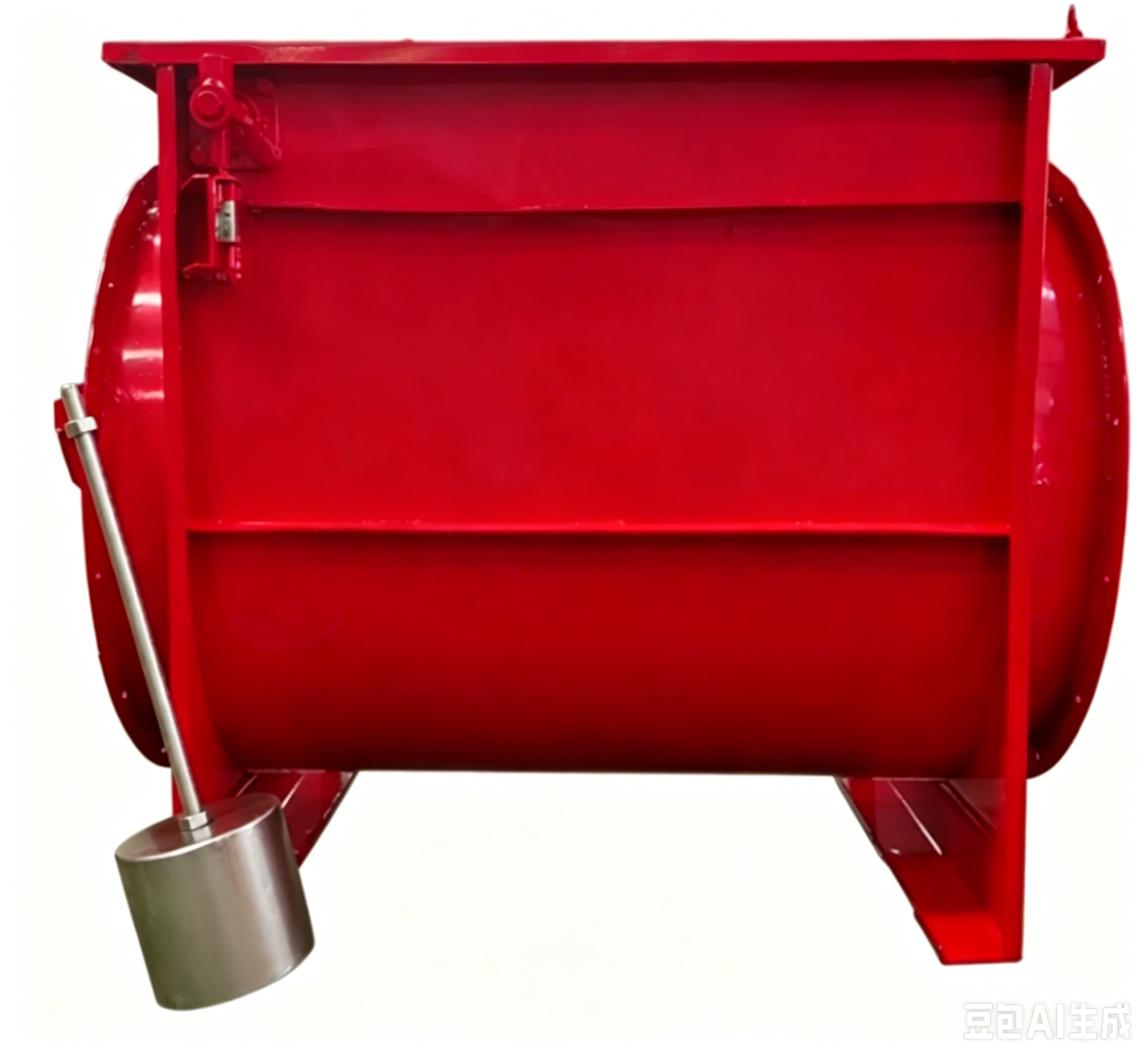
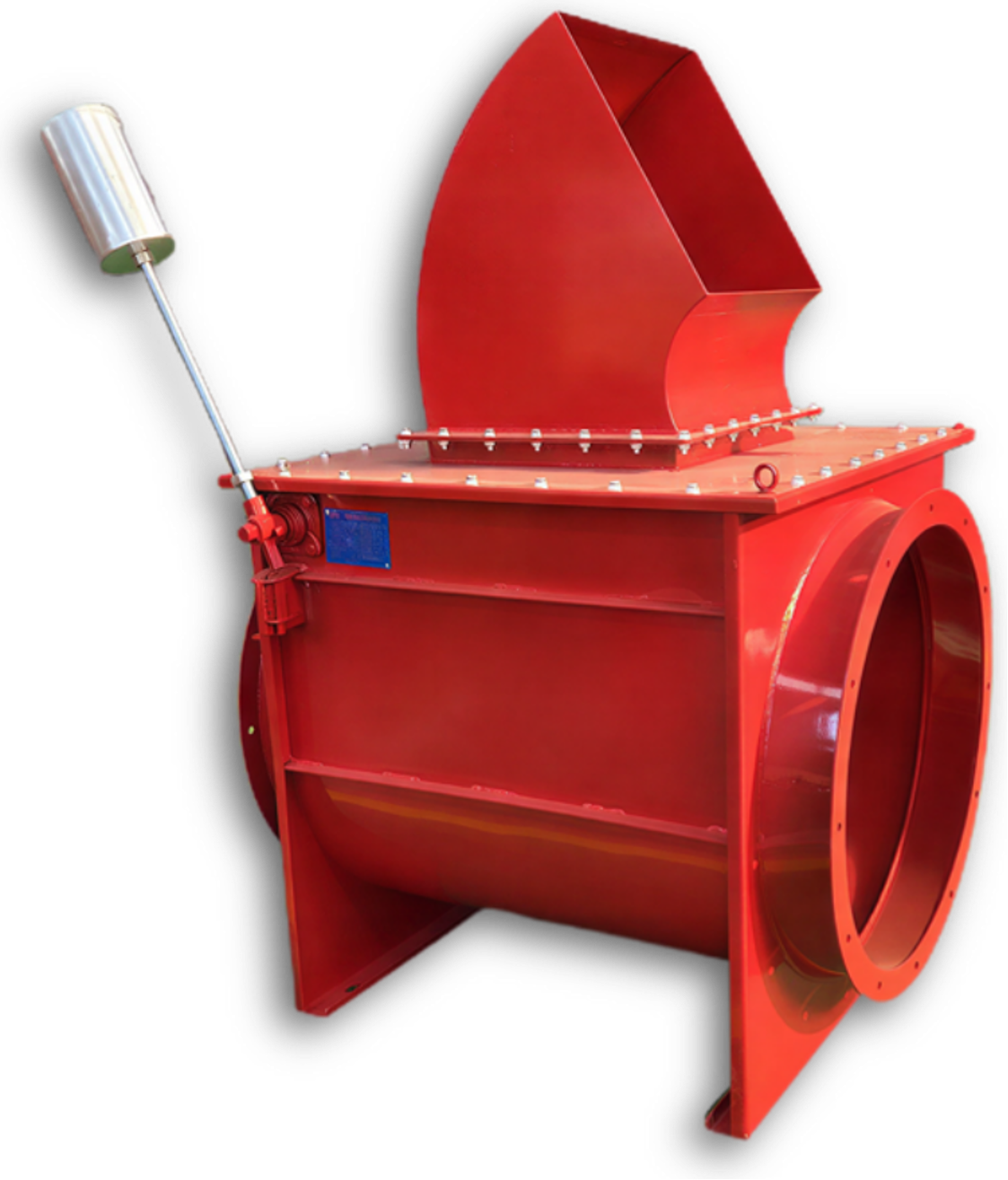
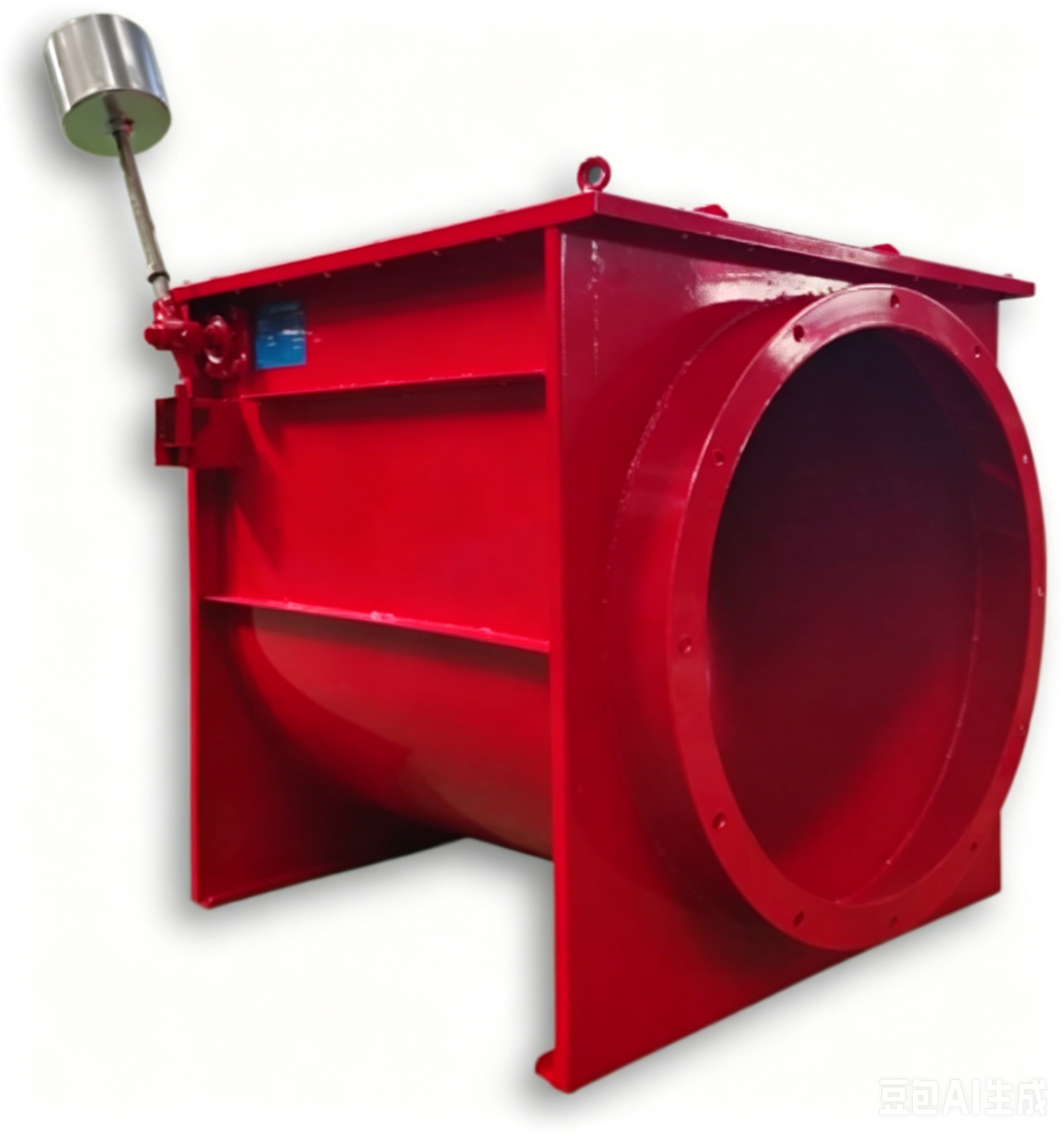
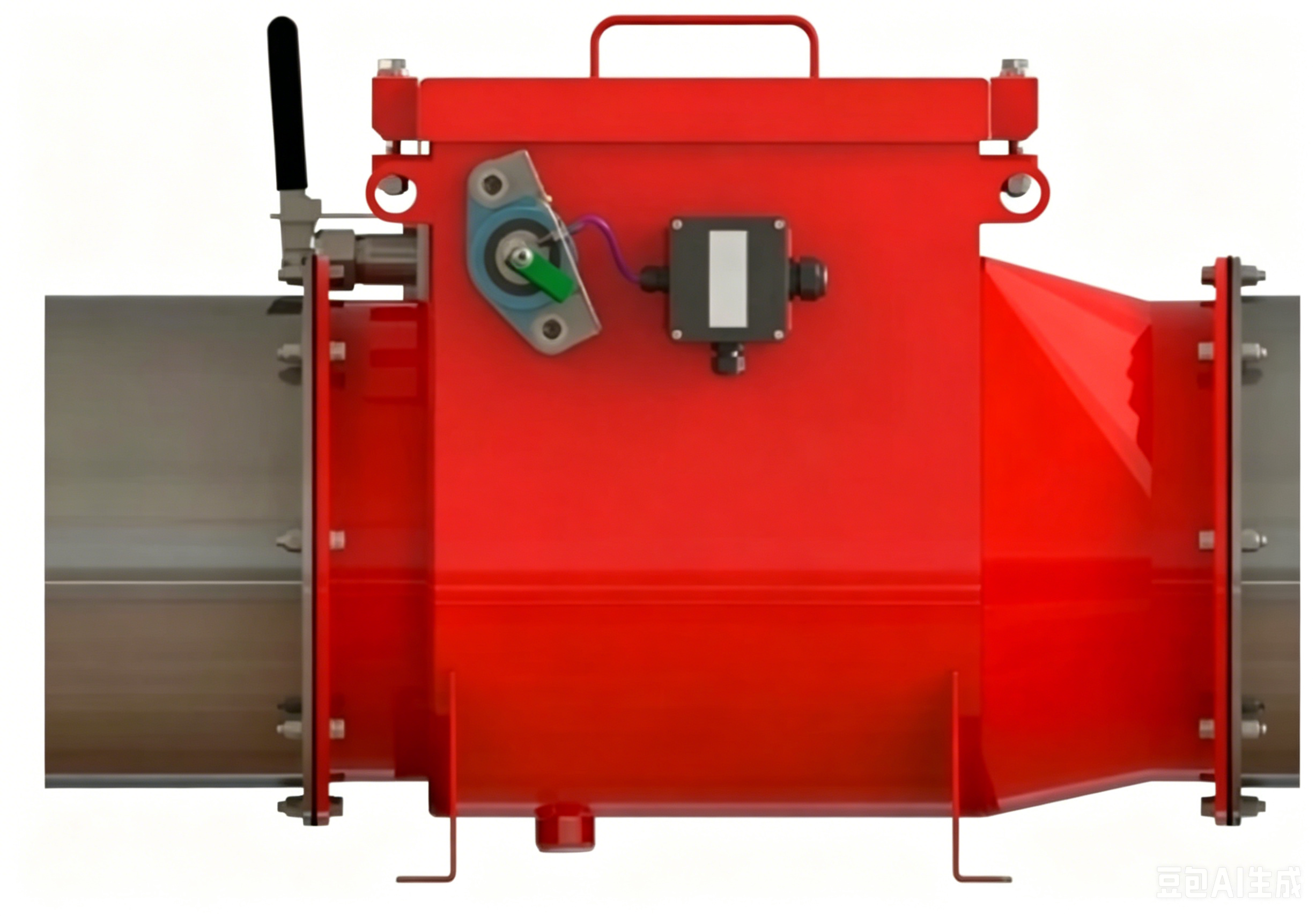
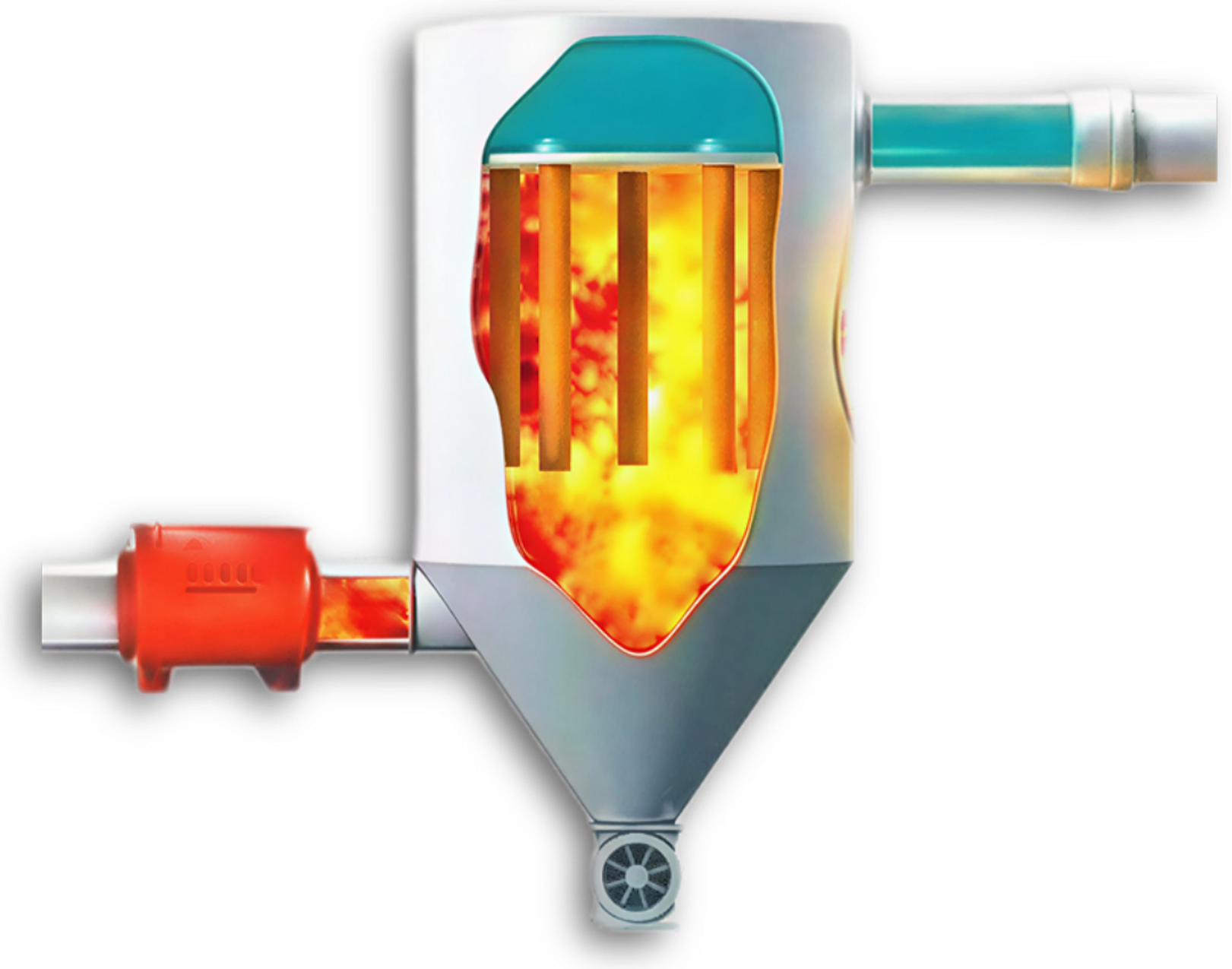
An Explosion Isolation Flap Valve is a safety device used in dust collection systems, pneumatic conveying systems, and industrial process ventilation systems to prevent an explosion from spreading through connected ductwork. It is designed to automatically stop the propagation of flames, pressure waves, and burning particles caused by a dust explosion.
Explosion isolation flap valves are commonly installed between equipment such as dust collectors, cyclones, filters, and production machinery to protect upstream and downstream equipment and personnel.
How Does an Explosion Isolation Flap Valve Work?
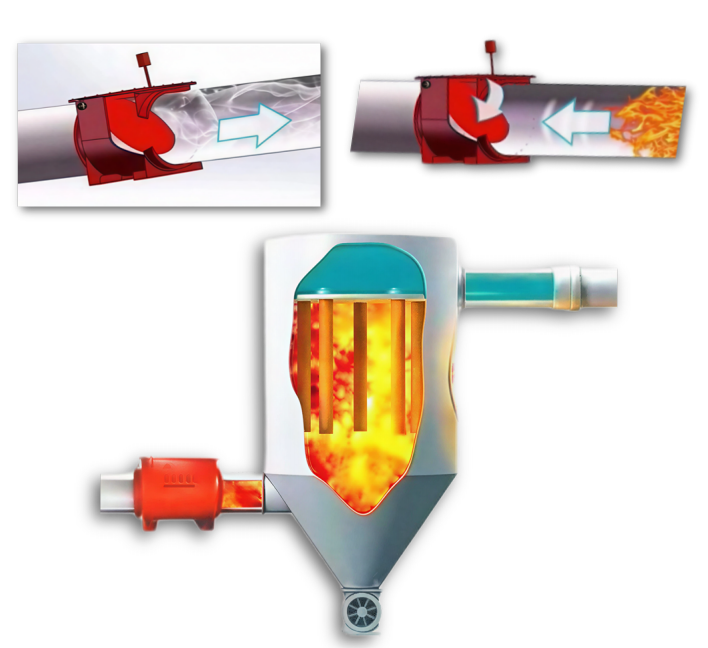
An explosion isolation flap valve operates using a normally open flap mechanism:
- Normal Operation
- Airflow passes freely through the duct.
- The flap remains open due to airflow and gravity balance.
- Dust-laden air can move normally through the system.
- Explosion Event
- A dust explosion creates a high-speed pressure wave traveling through the duct.
- The pressure wave forces the flap to rapidly close.
- The flap locks into position to block the passage.
- Explosion Containment
- The closed flap prevents:
- Flame fronts from traveling to other equipment
- Hot gases from spreading
- Secondary explosions in connected areas
- The closed flap prevents:
Main Components of an Explosion Isolation Flap Valve
Typical components include:
- Valve Body: Heavy-duty steel housing designed to withstand explosion pressure.
- Flap Disc: A movable plate that closes during an explosion.
- Locking Mechanism: Holds the flap closed after activation.
- Inspection Covers: Allow maintenance and cleaning.
- Wear-Resistant Liners: Protect against abrasive dust particles.
Where Are Explosion Isolation Flap Valves Used?
They are widely used in industries where combustible dust is generated, including:
- Wood processing and woodworking
- Metal grinding and polishing
- Food processing (sugar, flour, starch)
- Pharmaceutical manufacturing
- Chemical production
- Coal handling
- Biomass and pellet production
- Cement and mineral processing
Benefits of an Explosion Isolation Flap Valve
1. Prevents Explosion Propagation
The primary purpose is to isolate an explosion and protect connected equipment.
2. Improves Worker Safety
It reduces the risk of flames and pressure traveling into work areas.
3. Protects Expensive Equipment
It helps protect dust collectors, filters, fans, and production machinery from major damage.
4. Passive Protection
Many flap valves operate automatically without requiring electrical power or control systems.
Working Principle Diagram of Explosion Isolation Valve
Here the video link shows how it works:
https://www.youtube.com/shorts/pUnSfLbD-Ac