
Introduction
In industrial dust collection systems, explosion safety is a critical concern. Processes involving combustible dusts, such as metal processing, woodworking, chemical manufacturing, food production, and pharmaceutical industries, can create a potential risk of dust explosions. When an explosion occurs inside a dust collector or pipeline, the pressure wave and flame can travel through connected ducts and spread to other areas of the facility. An explosion isolation flap valve is a passive safety device designed to prevent the propagation of explosions through ductwork. It automatically closes when an explosion occurs, isolating the affected equipment and protecting upstream and downstream areas from damage.
What Is an Explosion Isolation Flap Valve?
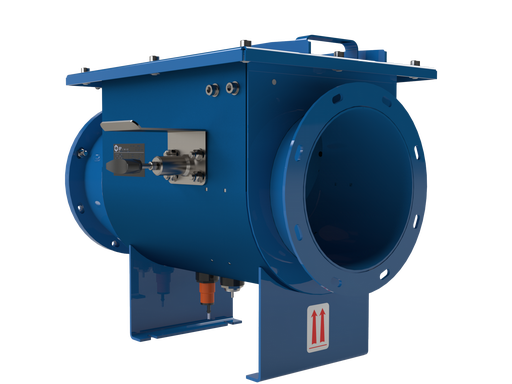
An explosion isolation flap valve is a mechanical protection device installed in the ductwork of dust extraction systems. Its primary function is to stop flame, pressure, and burning dust from traveling through connecting pipelines during an explosion event.
Unlike active explosion suppression systems, flap valves do not require electrical signals, sensors, or external power sources. They rely on the physical force generated by the explosion itself to activate the closing mechanism.
Typical installation locations include:
- Dust collector inlet and outlet ducts
- Pneumatic conveying pipelines
- Grinding and milling systems
- Industrial vacuum systems
- Combustible dust processing equipment
Working Principle of an Explosion Isolation Flap Valve
The operation of an explosion isolation flap valve can be divided into several stages:
1. Normal Operating Condition
During normal operation, airflow from the dust collection system keeps the flap disc in an open position. Dust-laden air passes freely through the pipeline with minimal pressure loss.
The valve remains open because the airflow force is balanced with the weight and design resistance of the flap.
2. Explosion Detection by Pressure Wave
When an explosion occurs inside a dust collector or process equipment, a rapid pressure increase creates an explosion shock wave that travels through the duct.
As the pressure wave reaches the explosion isolation flap valve, it pushes against the flap disc with significant force.
3. Automatic Valve Closure
Driven by the explosion pressure, the flap disc quickly swings or moves into the closed position.
Once closed:
- The valve blocks the pipeline completely.
- The explosion flame cannot pass through.
- Burning dust particles are prevented from spreading.
- The pressure wave is isolated within the protected section.
The valve locks in the closed position to prevent the explosion from reopening the passage.
4. Explosion Isolation
After the flap valve closes, the explosion is contained within the original equipment area.
This prevents:
- Secondary explosions in connected equipment
- Damage to production areas
- Injuries caused by flame propagation
- Extensive equipment failures
After inspection and resetting, the flap valve can usually be returned to service.
Main Components of an Explosion Isolation Flap Valve
A typical explosion isolation flap valve consists of several important components:
1. Valve Body
The valve body provides the structural support and withstands the mechanical forces generated during an explosion.
2. Flap Disc
The flap disc is the main moving component. It opens during normal operation and closes rapidly when exposed to explosion pressure.
3. Counterweight or Balance System
The counterweight helps maintain the flap in the open position during normal airflow while allowing rapid closure during an explosion.
4. Locking Mechanism
The locking system keeps the valve securely closed after activation to ensure reliable explosion isolation.
5. Inspection Access
Many designs include inspection covers or access ports for maintenance and safety checks.
Advantages of Using an Explosion Isolation Flap Valve
1. Passive Explosion Protection
Because the valve operates mechanically, it does not require:
- Electrical power
- Explosion sensors
- Control systems
This makes it highly reliable in emergency situations.
2. Fast Response
The flap valve reacts immediately to the explosion pressure wave, reducing the risk of flame and pressure transmission.
3. Low Maintenance Requirements
With a simple mechanical structure, explosion isolation flap valves require less maintenance compared with active protection systems.
4. Cost-Effective Safety Solution
Compared with complex explosion suppression systems, flap valves provide an economical method for protecting dust collection systems.
Installation Considerations
Proper installation is essential for effective explosion protection.
Important considerations include:
- Install the valve in the correct airflow direction.
- Select the correct valve size based on duct diameter and airflow volume.
- Ensure sufficient straight duct length before and after the valve.
- Avoid installation locations where excessive dust accumulation may occur.
- Perform regular inspection and cleaning.
- Follow applicable explosion protection standards.
Applications of Explosion Isolation Flap Valves
Explosion isolation flap valves are widely used in industries where combustible dust hazards exist, including:
- Wood processing
- Metal grinding and polishing
- Grain handling
- Food processing
- Chemical production
- Battery manufacturing
- Pharmaceutical production
- Powder coating
Conclusion
An explosion isolation flap valve works by using the pressure generated from an explosion to automatically close and isolate the pipeline, preventing flames and pressure waves from spreading throughout a dust collection system.
As a passive explosion protection device, it provides a reliable, fast, and economical solution for protecting industrial equipment and personnel. For facilities handling combustible dust, installing properly designed explosion isolation flap valves is an essential part of a comprehensive explosion safety strategy.