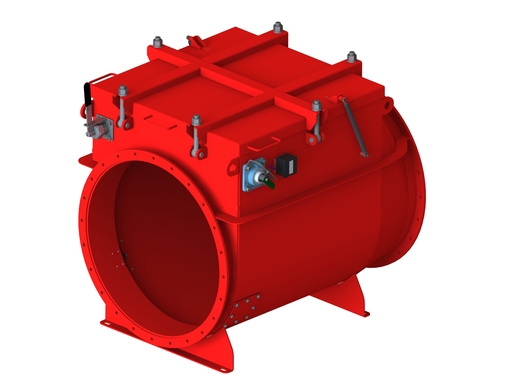

An explosion isolation flap valve is a safety device installed in dust collection systems, pneumatic conveying lines, and industrial ventilation systems to prevent an explosion from spreading through connected ductwork. It works by automatically closing a flap when an explosion pressure wave travels through the pipeline, isolating the affected section and protecting equipment, buildings, and personnel.
Explosion isolation flap valves are commonly used in industries where combustible dust is present, such as wood processing, metalworking, food processing, chemical manufacturing, pharmaceuticals, and coal handling.
How Does an Explosion Isolation Flap Valve Work?
An explosion isolation flap valve operates based on the pressure generated by an explosion.
During normal operation:
- Dust-laden air flows through the duct.
- The flap remains open due to airflow.
- The system operates like a standard air passage with minimal pressure loss.
When an explosion occurs:
Explosion pressure travels through the duct
A dust explosion inside a dust collector, hopper, or process machine creates a high-speed pressure wave that moves through connected pipes.
The flap automatically closes
The pressure wave pushes the internal flap shut. The stronger the explosion pressure, the faster the flap closes.
The explosion is isolated
Once closed, the flap prevents flames, hot gases, and pressure from traveling back through the duct to other equipment or production areas.
The valve resets after the event
Many designs allow manual inspection and resetting after activation, depending on the valve type and manufacturer.
Main Components of an Explosion Isolation Flap Valve
A typical explosion isolation flap valve consists of:
- Valve body – The main housing installed in the duct system.
- Isolation flap – A movable plate that opens during normal airflow and closes during an explosion.
- Hinge mechanism – Allows the flap to move freely and close quickly.
- Locking or sealing system – Helps maintain isolation after activation.
- Inspection cover – Allows maintenance and checking of internal components.
Where Are Explosion Isolation Flap Valves Installed?
Explosion isolation flap valves are usually installed:
- Between a dust collector and upstream production equipment
- On inlet or outlet ducting of bag filters
- In pneumatic conveying pipelines
- Between multiple process machines connected to one dust extraction system
Typical applications include:
- Wood dust collectors
- Metal grinding and polishing systems
- Grain and food processing equipment
- Coal pulverizing systems
- Chemical powder handling systems
Benefits of Using an Explosion Isolation Flap Valve
1. Prevents Explosion Propagation
The primary purpose is to stop an explosion from moving through ductwork and reaching other areas of the facility.
2. Protects Equipment
It reduces the risk of damage to expensive machinery, filters, fans, and production equipment.
3. Improves Workplace Safety
By limiting explosion spread, these valves help protect workers from secondary explosions.
4. Automatic Operation
Most explosion isolation flap valves operate without external power, responding directly to explosion pressure.
Explosion Isolation Flap Valve vs Explosion Vent
Although both are explosion protection devices, they serve different purposes:
| Device | Function |
|---|---|
| Explosion isolation flap valve | Stops explosion propagation through ducts |
| Explosion vent panel | Releases explosion pressure safely from equipment |
A complete explosion protection system often combines explosion venting, explosion suppression, and explosion isolation devices.
Important Selection Factors
When selecting an explosion isolation flap valve, consider:
- Duct diameter
- Airflow direction
- Explosion pressure rating (Kst/Pmax)
- Dust characteristics
- Operating temperature
- Installation location
- Compliance with safety standards
The valve must be correctly sized and installed according to the dust hazard assessment and applicable standards, such as NFPA 69 (Explosion Prevention Systems) and EN 16447 (Explosion isolation devices).
Conclusion
An explosion isolation flap valve is a critical safety component in dust collection systems. By automatically closing during an explosion event, it prevents flames and pressure waves from spreading through ductwork, helping protect industrial facilities from catastrophic secondary explosions.
For industries handling combustible dust, installing a properly selected explosion isolation flap valve is an essential part of a comprehensive explosion protection strategy.
Please find our Explosion Isolation Flap Valve specifications @https://dustvalve.com/product/explosion-isolation-valve