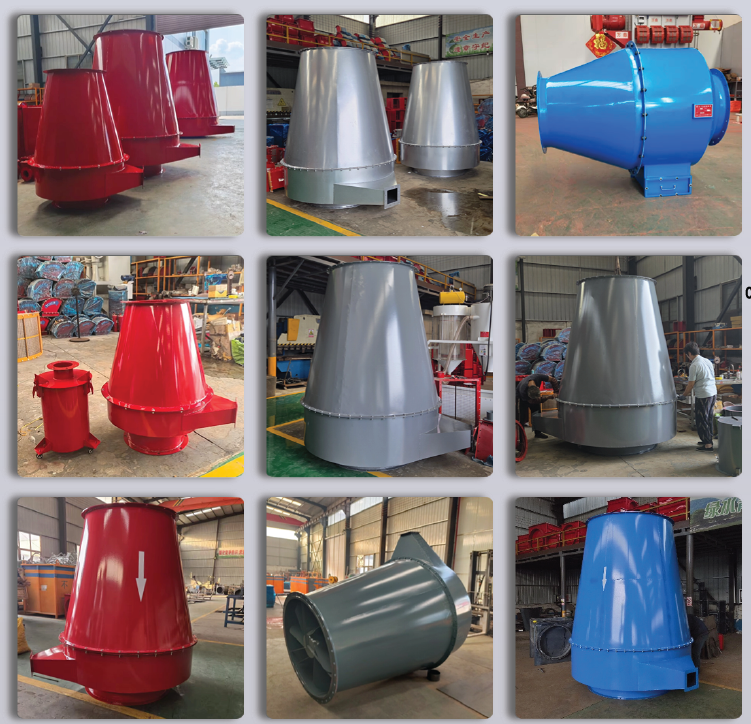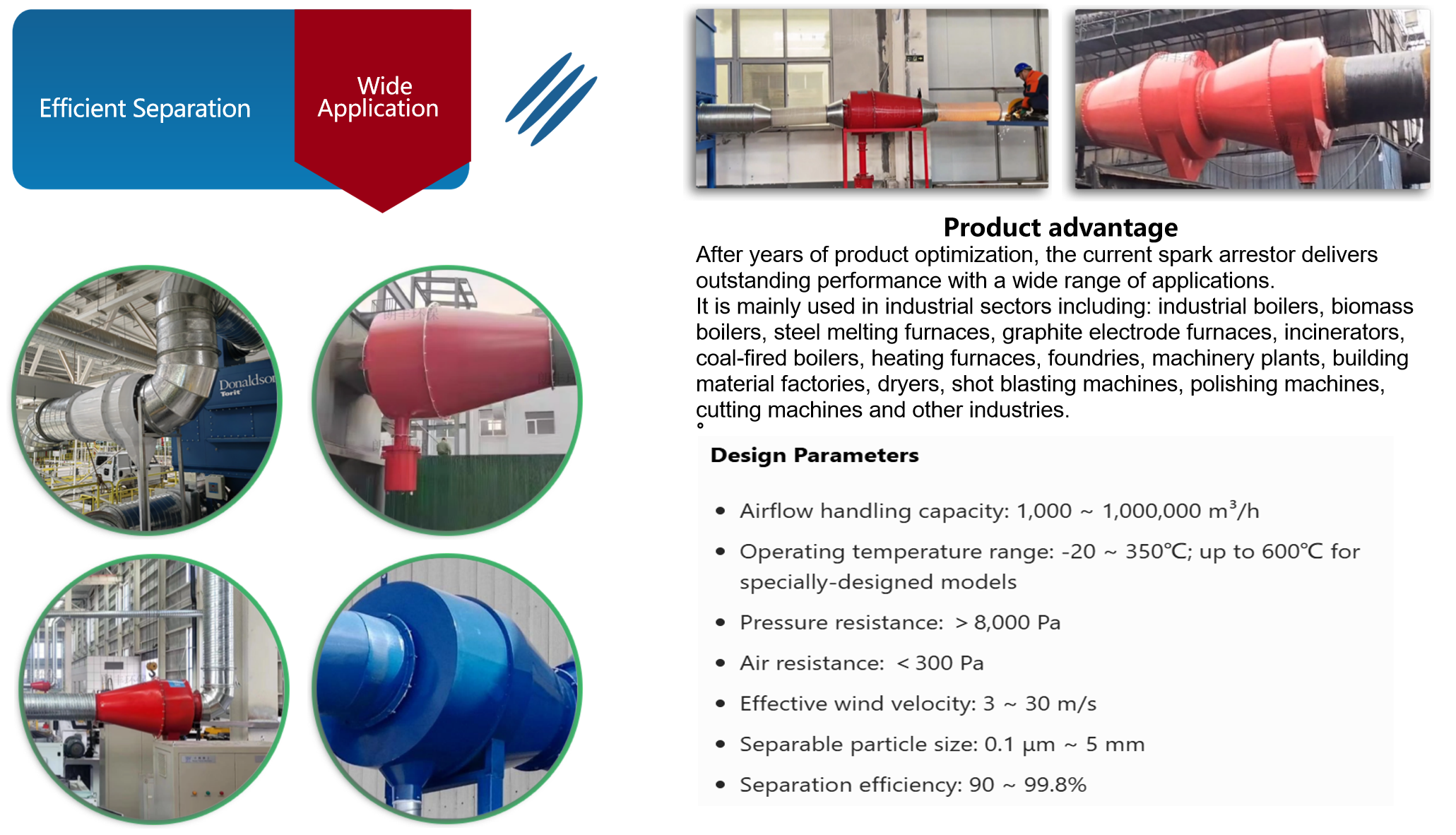
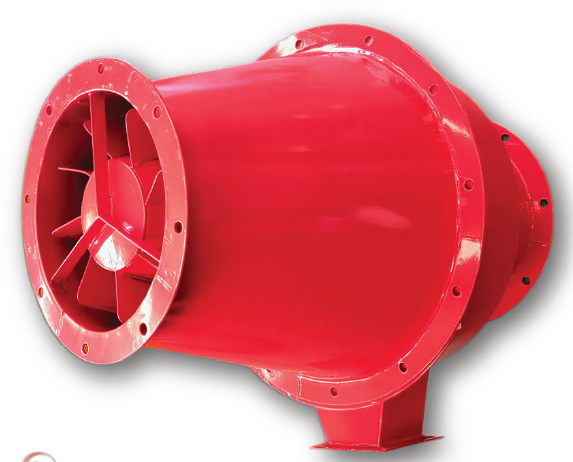
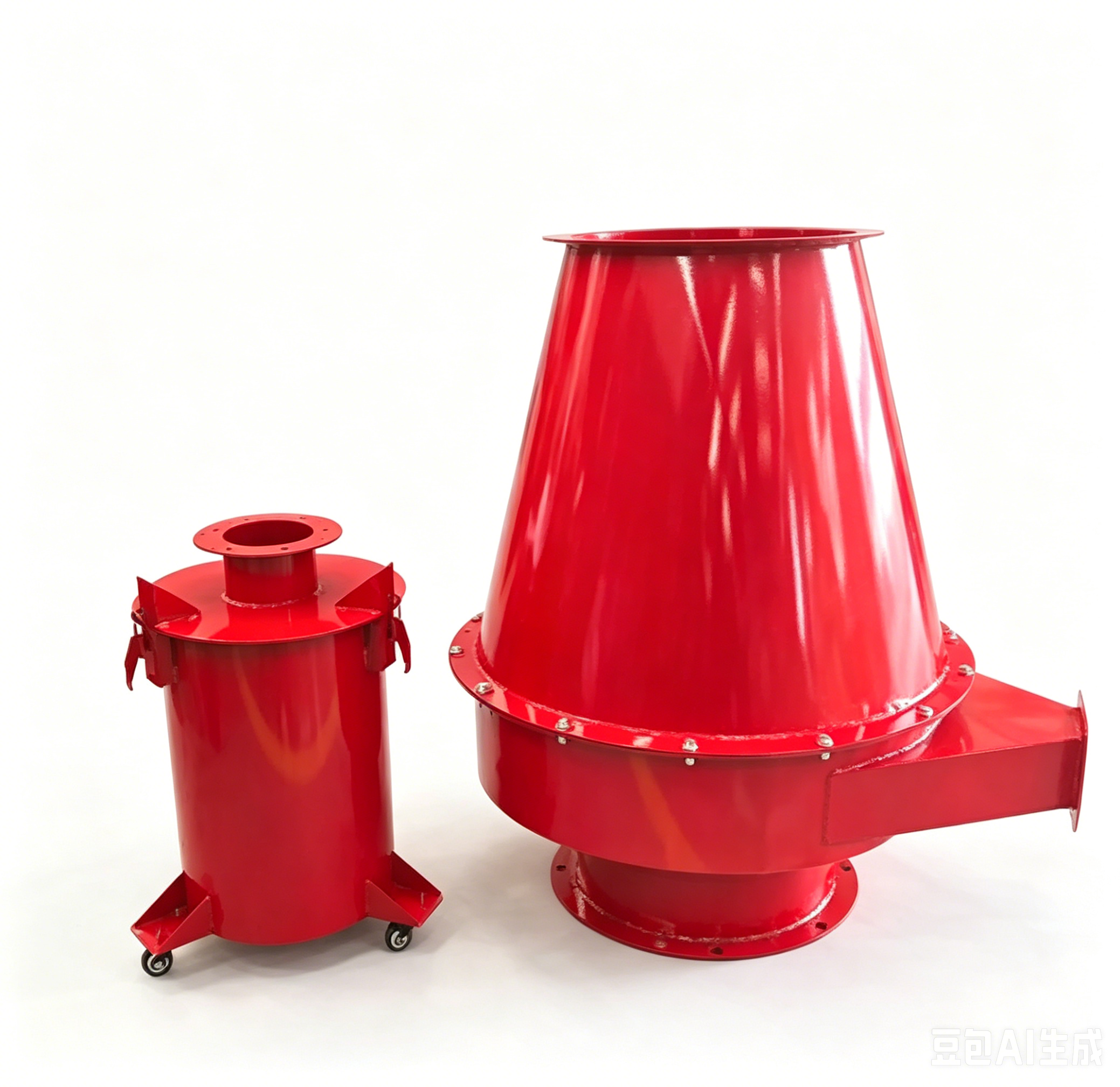
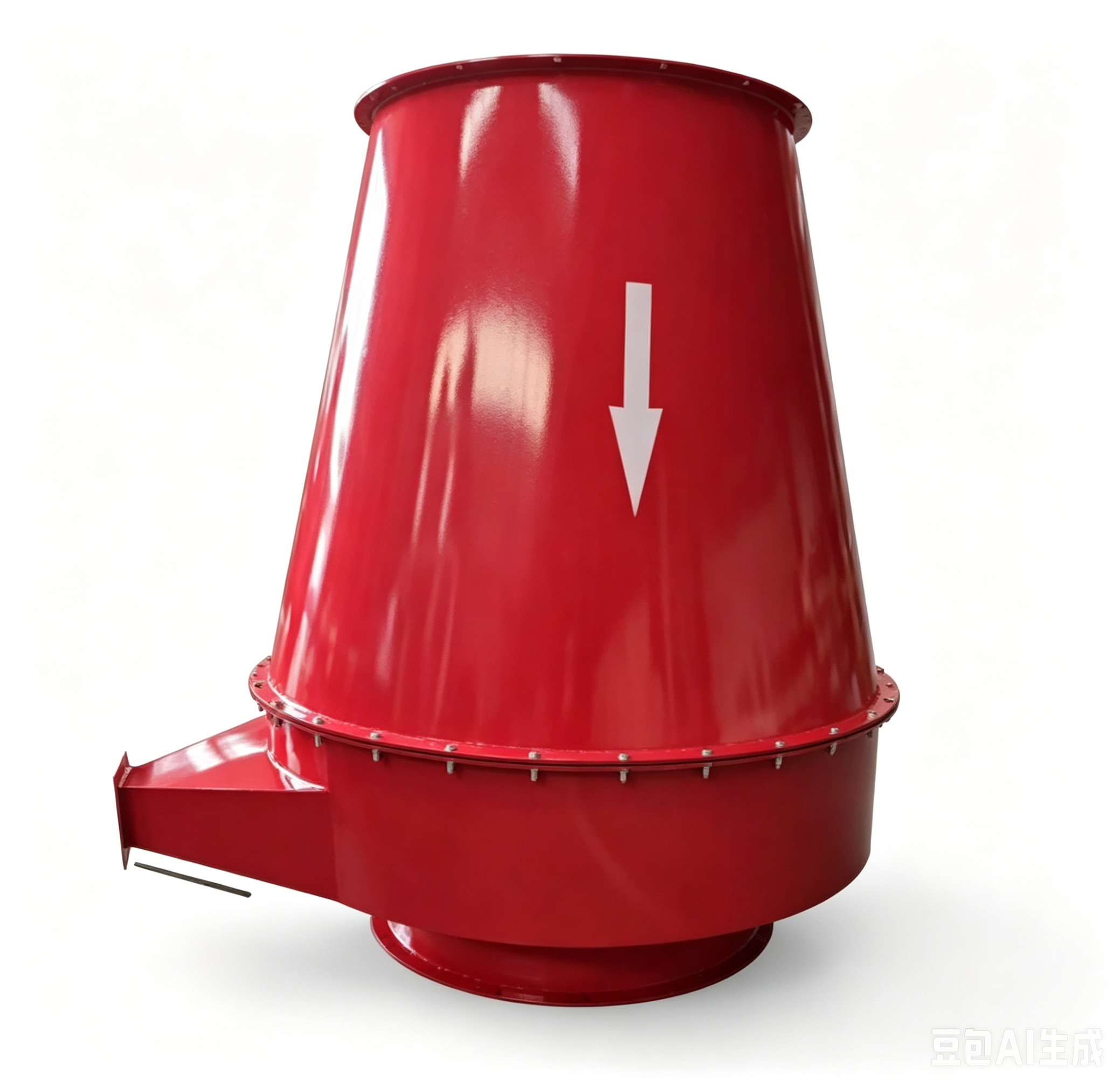
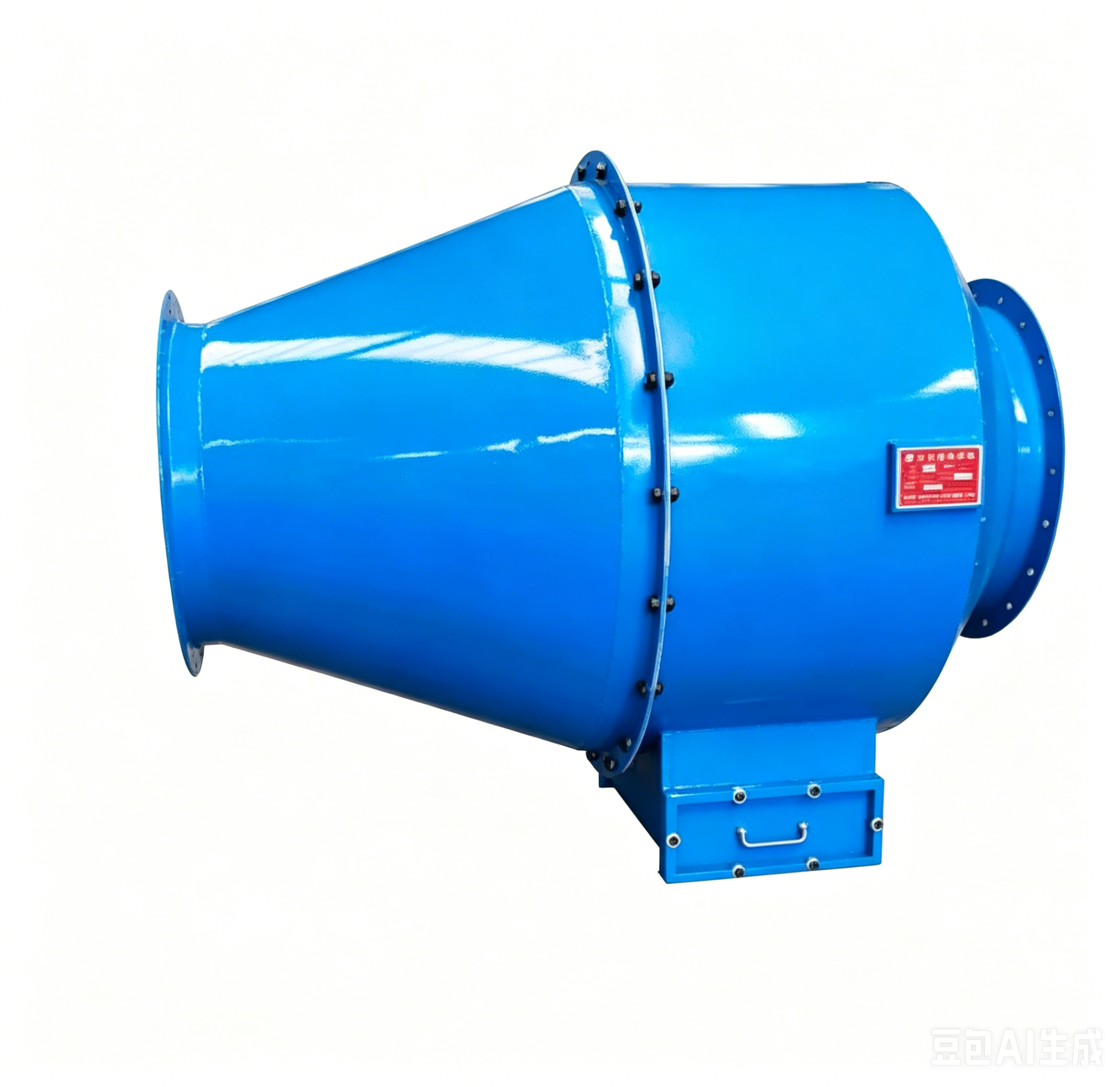
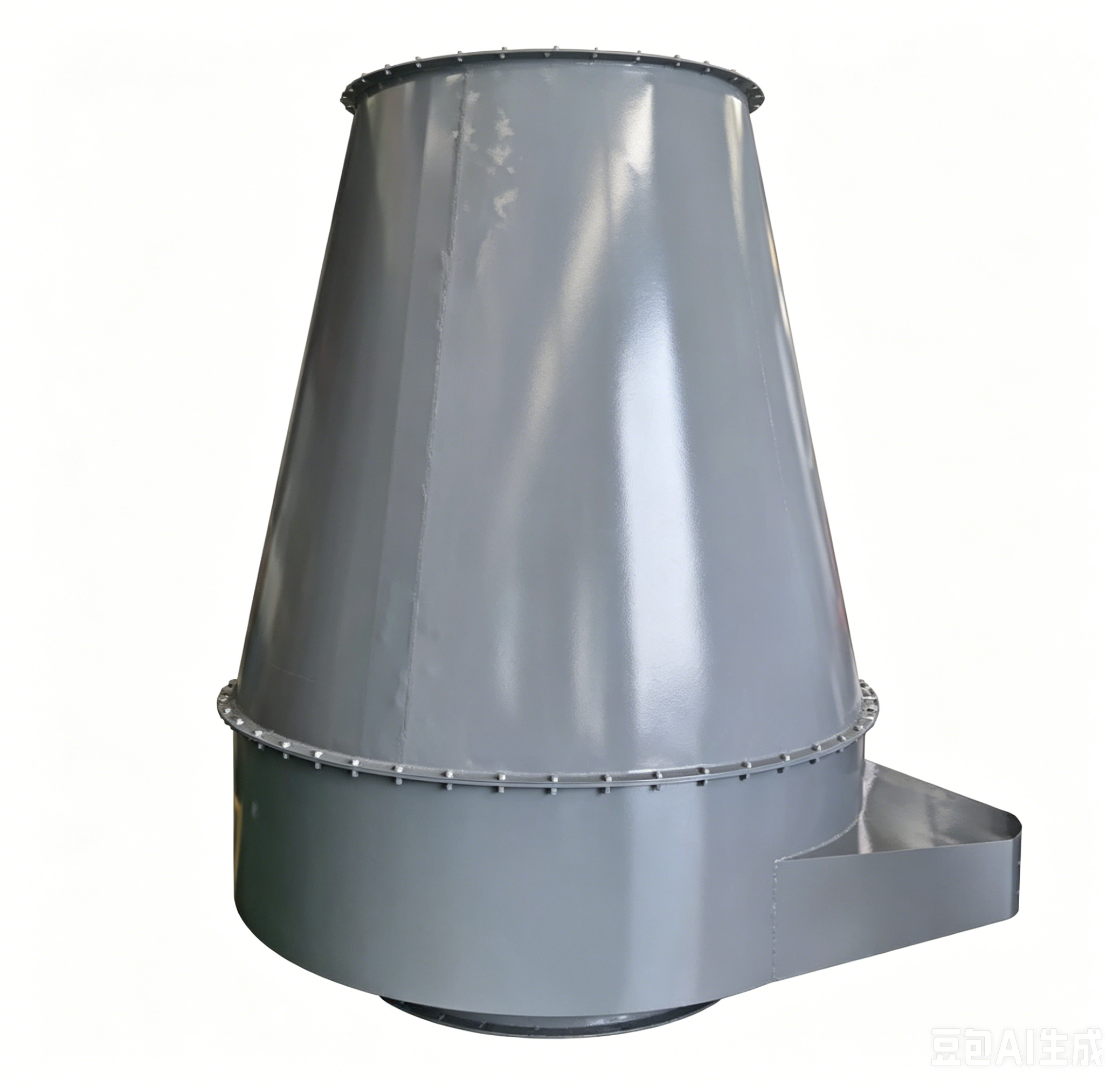
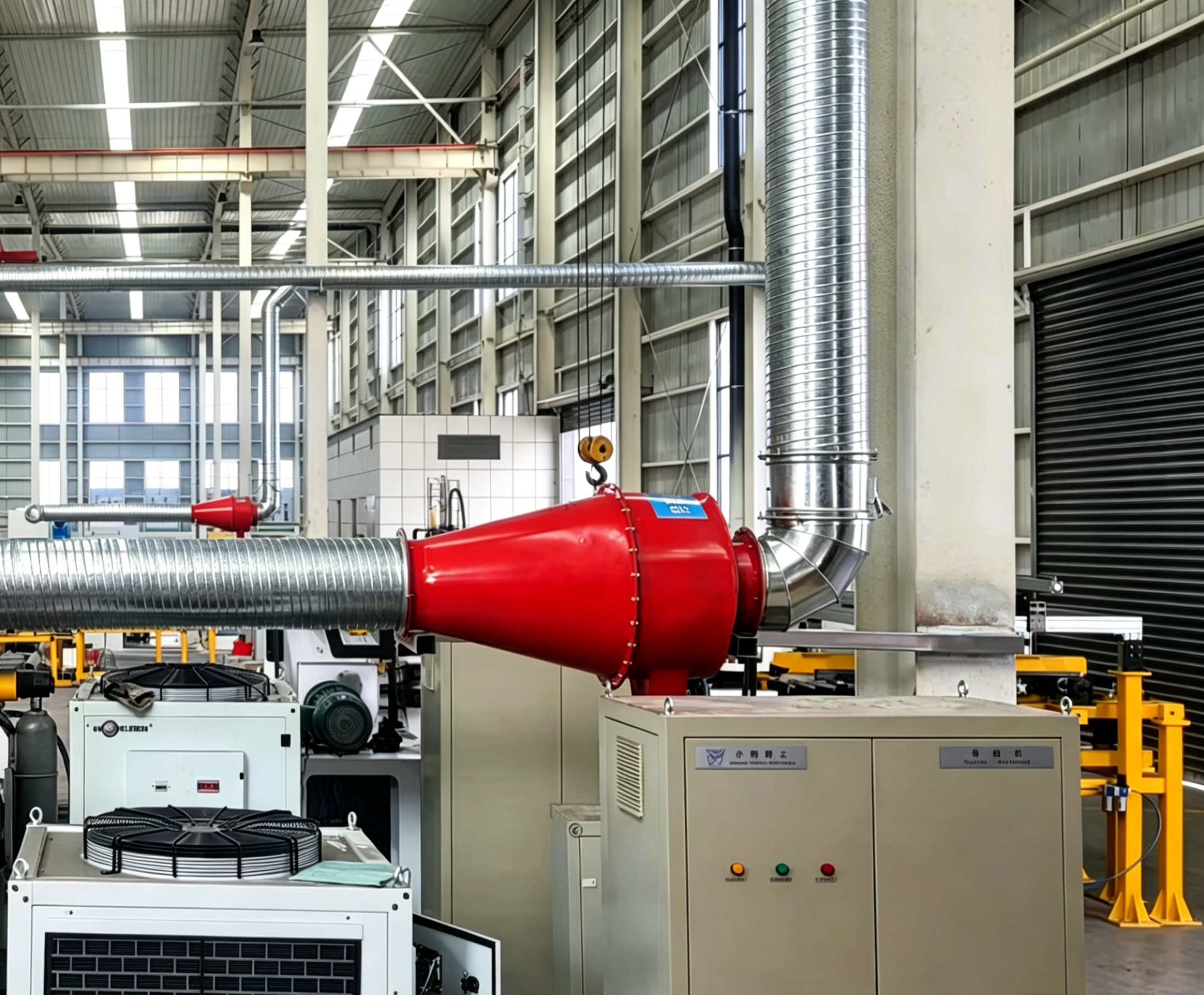
The dust collector spark arrestor is an industrial safety device. Its technology was introduced from the UK in 2022 and later optimized and redesigned, making it applicable to working conditions with heavy dust and frequent sparks. It is mainly used to intercept and extinguish embers and sparks in flue gas or dust airflow, preventing them from entering the subsequent dust removal system and causing fire hazards, filter bag burnout, or fire and explosion accidents.
Common Types of Dust Collector Spark Arrestor
- Cyclone Type (Centrifugal Separation)
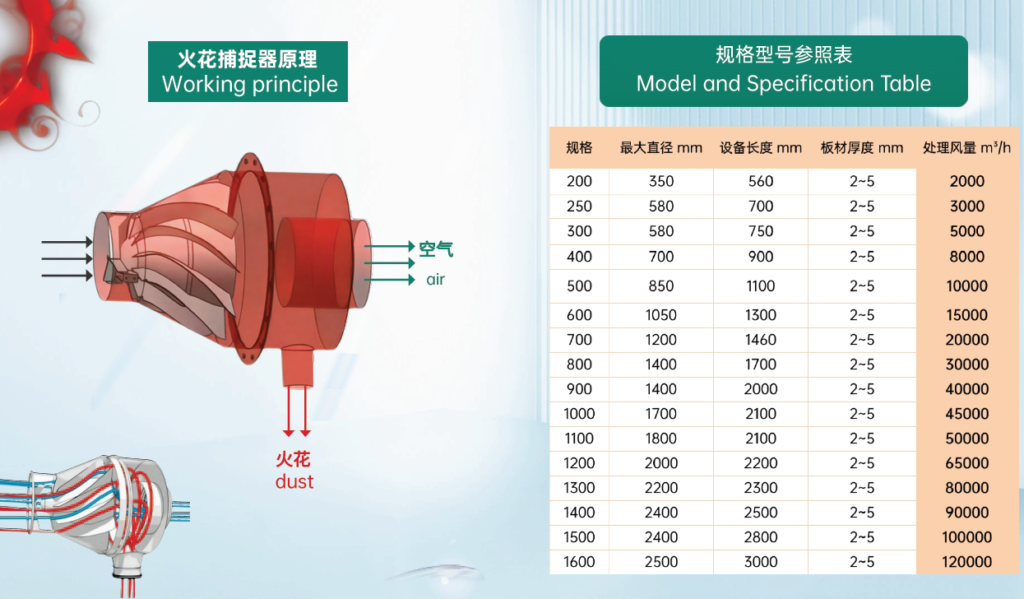
It adopts inclined reverse flow vanes to guide the airflow into high-speed rotation and form a centrifugal force field. Sparks are thrown onto the cylinder wall and extinguished by collision. It is suitable for high-density spark scenarios such as laser cutting machines, industrial furnaces, iron and steel metallurgy, and mechanical processing industries. Baffle Type (Labyrinth Impact)
Airflow passes through multi-layer folded plate honeycomb structures or staggered baffles to form a tortuous flow path, increasing the probability of spark collision and putting out sparks stage by stage.- Gravity Settling Type
The shell cross-sectional area is enlarged to reduce the airflow velocity to below 3m/s. Larger particles settle naturally by gravity. It is rarely applied due to its large equipment size and low efficiency. - Flame Arrestor Mesh Type
It is mainly used in gas pipelines. Stainless steel corrugated mesh is adopted to block sparks in the gas. Its application is limited because it is difficult to clean dust and prone to blockage and adhesion.
Size Specification of Dust Collector Spark Arrestor
Benefits of Installing a Dust Collector Spark Arrestor
A properly designed spark arrestor provides:
Improved Fire Safety
It prevents ignition sources from reaching combustible dust deposits.
Reduced Equipment Damage
Protects:
- Filter cartridges
- Filter bags
- Dust collector housing
Increased System Reliability
Reduces unexpected shutdowns caused by fire incidents.
Lower Maintenance Costs
Prevents expensive repairs and replacement of damaged filtration components.
See the shipment of big size dust collector spark arrestor: